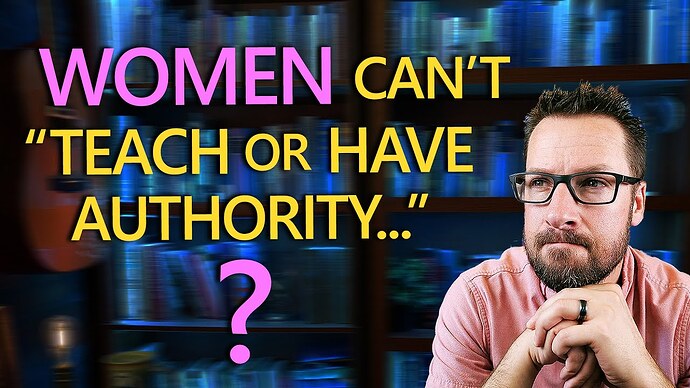
I guess it depends on what we mean by ‘preacher.’ Do you mean an official role in the church, or anyone who publicly proclaims God’s word and calls people to respond? There are more women in the Bible worth mentioning, too.
If we’re talking about authority, what about Huldah (she is a prophet in the Hebrew Bible)? She gave a binding interpretation to Josiah’s envoys. Does that count as preaching? And then there’s Junia, who is prominent among the apostles.
In Psalm 68:11, and how the Orthodox tradition remembers the Samaritan woman (Photini) as ‘equal-to-the-apostles.’ Does that mean if she was equal to the apostles, then she was a preacher?
I’ve heard Mary Magdalene is considered the first woman preacher because she was the one who announced the resurrection to the disciples.
But I don’t know, that seems like stretching the definition. The angels at the tomb gave her a message to deliver, which is different from the kind of teaching and preaching ministry we see established in the early church. There’s a difference between sharing testimony about what you witnessed and the ongoing teaching role that Scripture discusses.
It depends. Are we talking about formal church roles or just sharing the gospel? Both are valid ministries, but they might be categorized differently depending on your church tradition.
There’s a difference between sharing testimony (what the Samaritan woman did) and holding an official teaching office. She spread the word and brought people to Christ, but was that the same as what we’d call preaching or prophetic ministry today? I don’t think so.
I’m not sure if the labels (preaching, prophesying, and evangelizing) matter as much as recognizing that women have been part of spreading the Gospel message from the beginning.
Mary Magdalene was the first person to see Jesus after the resurrection, and then she went straight to tell the disciples. Jesus chose her to announce ‘He is risen!’ to the apostles. That’s pretty significant. The first person commissioned to proclaim the resurrection was a woman.
So yeah, I think you’re onto something with the Samaritan woman. If Mary Magdalene’s running to tell the disciples about the risen Christ counts as proclamation (and many scholars think it does), then the Samaritan woman’s doing basically the same thing seems similar. Both had an encounter with Jesus, immediately went to tell others, and people believed because of their witness.
Good discussion! If we define preaching as the proclamation of divine truth about God’s nature and works, Eve might be our first example. She bore witness to what the LORD had done in her life.
In Genesis 4, when Eve gives birth to Cain, she makes a theological declaration:'I have gotten a man with the help of the LORD. ’ She’s technically proclaiming God’s name and His role in creation. She’s making a divine announcement about who God is and what He does.
The woman who found the lost coin immediately called her neighbors to rejoice with her (she couldn’t help but proclaim what God had done). Eve did the same thing. She experienced God’s creative power firsthand and declared it.
I was about to write a whole dissertation here, but Mike Winger has a YouTube series on women in ministry that covers the Samaritan woman question much better than I could in a comment. It’s pretty thorough and got me thinking. I put the link here if anyone is interested in watching.
Miriam holds a significant role in prophetic ministry. She’s called a prophetess right there in Exodus 15, making her the first woman explicitly given that title in Scripture. Yes, the Samaritan woman’s testimony brought people to Christ, which is a powerful form of evangelism, but prophetic ministry has its own distinct calling and recognition in Scripture.
Check out Exodus 28, it says the priesthood was specifically reserved for Aaron’s sons. In the Old Testament, women like Deborah and Huldah served as prophets and judges. So when the Samaritan woman shared the good news, she was evangelizing her town, which is different from holding a teaching office in the assembly.
Prophesying and evangelizing are different from formal priestly duties.
I think there are actually two women who were the first evangelists. The Samaritan woman in John 4 is the earlier one, and then there’s Mary Magdalene, the first witness to the resurrection. The Samaritan woman is interesting because she didn’t have a clean reputation or any religious credentials. And that is certainly not enough to be a preacher. It’s more like a right place, right time.
In the early Church, prophesying was a special way for members to share insights and inspiration, and it was different from formal, authoritative teaching.
Kerygma (preaching) in the New Testament is a formal proclamation of the gospel. What the Samaritan woman did was kind of martyria (testimony).
I consider my grandmother a preacher even though she wasn’t an official one. She was the one who first told me about Jesus when I was seven.
I think we get too caught up in titles and miss the bigger picture. The Samaritan woman brought her town to meet Jesus, and that had a greater impact than most sermons I’ve heard. You can call it evangelizing, witnessing, or preaching, she proclaimed Christ, and people came to faith.