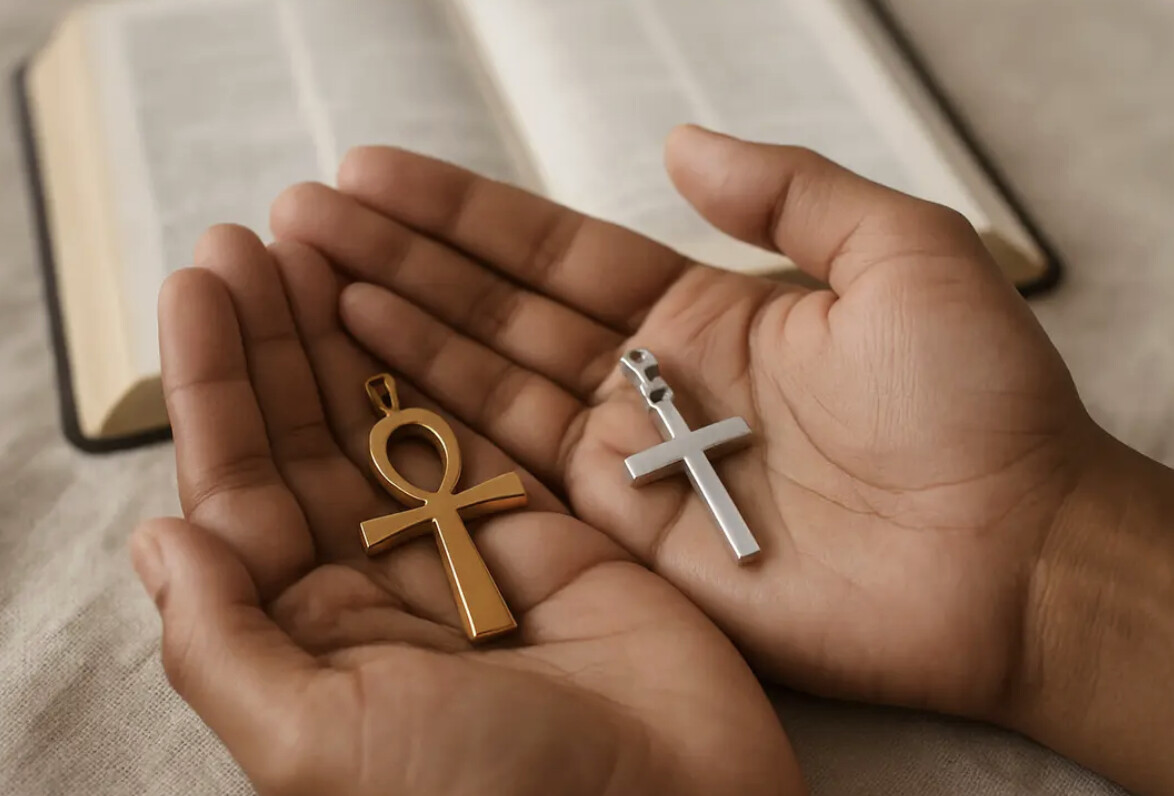
What does the Ankh mean for Christians and is it okay for a Christian to use one?
Early Egyptian believers incorporated it centuries ago, like the life/divine breath symbolism tied into their faith somehow. I can’t figure out if the historical connection means it’s fine to use or if there’s a reason it got dropped. Nobody at my church would know what to do with that question lol
You don’t have to pray alone. Have your prayer submitted to the Holy Land as well as churches, monasteries, and prayer groups worldwide who will lift your intentions to God and pray on your behalf.
From the Holy Sepulchre in Jerusalem to sacred sites across the globe, your prayer will be shared and remembered.
The ankh was adopted directly by the Coptic Christians in Egypt around the 4th century CE. They called it the ‘crux ansata’… which literally means ‘handled cross.’ They modified it slightly, made the loop more circular instead of the oval shape, but kept using it as their version of the Christian cross.
When Christians were dismantling the Serapeum (a major pagan temple) in Alexandria they found ankh symbols carved into the stones and both pagans and Christians present claimed the symbol. The pagans said it meant ‘life to come’ and the Christians said it was basically theirs.
So from pretty early on, Egyptian Christians saw enough overlap with their beliefs that they could embrace it. The core symbolism of ‘life’ and ‘breath of life’ translated well. The Copts used it specifically to represent Christ’s promise of eternal life and resurrection. They kept using it in church decorations and textiles for centuries. It just never caught on in Western Christianity the same way, which is probably why your church folks wouldn’t know what to make of it.
So historically? Egyptian Christians used this symbol as part of their faith. It was ‘baptized’ into Christianity early on. Whether you personally feel comfortable wearing one is a personal thing, but there’s real modern Christian history behind it, but (on the other hand) anyone telling you this is idolatry probably doesn’t know the history.
If anyone has a problem with a Christian using an Ankh, their words are not from God but from their own insecurity of not knowing what an Ankh even is.
I’ll leave the meaning answer for the buffs who know the details of this stuff but you won’t have a problem.
The Coptic use of the ankh-cross helped establish the cross as the Christian symbol.
Early Christians in Rome used the fish symbol because the cross was an execution method. Would’ve been like wearing an electric chair pendant today. The ankh-cross gave them a life-affirming symbol that could represent Christ’s victory over death.
You can still see it in Coptic churches today. For them, it represents the resurrection and eternal life through Christ. Similar to how the Celtic cross has a specific regional flavor but is still Christian. Or Armenian crosses. The reason it ‘got dropped’ in the West is probably just geography and cultural distance from Egypt. But the Coptic tradition kept it alive. It’s a valid Christian symbol with centuries of use, just not one most Western churches know about.
In short: You’d probably get a few weird looks from judgmental people, some interested questions from the brighter ones and anyone who knows what it is won’t bat an eye.
It became a symbol of resurrection and eternal life in Christ for them. That’s real Christian usage with historical grounding.
That said, the ankh today gets used in a lot of contexts that have nothing to do with Coptic Christianity. Goth subculture picked it up (partly from that vampire movie in the 80s), new age spirituality uses it, some people wear it for the aesthetic. One source mentioned that sometimes, when used symbolically today, it represents religious pluralism - the idea that all paths lead to life equally.
So whether it’s okay probably depends on why you’re using it.
But if you personally associate it more with its pagan origins or modern occult meanings, that’s different. Paul talks about similar stuff in Romans 14 - our conscience matters in these decisions. The symbol has legitimate Christian history through the Copts, but the meaning you attach to it matters.
Before those Christians used it, the ankh represented Egyptian deities’ authority to resurrect souls, which in Christian belief belongs only to God. He actually judged those same Egyptian gods in Exodus 12.
Shouldn’t the symbols we wear or display as Christians point specifically to Christ and his work? The ankh carries meaning from Egyptian religion, so I’m not sure it really communicates what we’d want it to about our faith.
I wonder what it says to others about where our hope comes from.
If the ankh is ‘just a thing’ without the belief behind it, then the question isn’t really whether Christians can use it. It’s whether there’s any point. What would someone even be trying to communicate by wearing one? The early Egyptian Christians found meaning in connecting it to their faith, but if you’re not in that tradition, you’re just wearing jewelry.
I guess you can do that; it doesn’t cause any kind of problem, but I would not replace your cross with one. People are so focused on the wrong symbols and the wrong displays of faith that they’ve lost the actual substance.
Redeeming symbols has always been part of Kingdom work. Paul took pagan altars and turned them into proclamations of the risen Lord in Acts 17.
You could pair your ankh with John 10:10 - let it open conversations about the abundant life only He gives. Your freedom in Christ is real, but it’s worth reading the room with brothers and sisters who might not see it the same way yet.
What really matters is your heart, not the symbol, but the Egyptian connection is exactly why I’d steer clear of it.
Those ancient Egyptian religious practices were deeply tied to spiritual forces that don’t align with Christianity, and the ankh carried meanings rooted in that context. I get the historical argument about early Egyptian believers adapting symbols, but I think there’s wisdom in avoiding imagery with those particular origins. The fact that it didn’t persist in mainstream Christian practice might be telling us something.
My friend wears a Coptic ankh-cross hybrid specifically because it opens evangelism conversations with coworkers that her regular cross never did. Different tool, same mission.
When I became a Christian from a different faith background, I panicked about every cultural object in my home. An older believer pointed me to Acts 17, where Paul used the ‘unknown god’ altar as a bridge rather than demanding it be destroyed.
A symbol drawing your heart toward the life Christ gives is different from treating it as some mystical power source. Pray about what it means to YOU specifically.
Fair question to ask, but that standard might be stricter than what we actually apply to other Christian symbols.
The fish symbol pointed to Greek wordplay before it pointed to Christ. The cross itself was a Roman execution tool before it became ours. Even Christmas trees have pre-Christian roots that got redeemed. The Copts took something that meant ‘life’ and said ‘yes, and that life is found in Jesus.’
We shouldn’t ask whether something started with Christ, but whether it now leads people toward Him.
The ankh was used as visual shorthand, much like we’d use a heart emoji today. I’ve heard there’s a specific monastery near Luxor that has Christian graves from the 5th century with ankhs carved alongside Scripture verses about eternal life.
Also, my Coptic Orthodox friend showed me photos from her pilgrimage there last year, and the tour guide told her something interesting about why that particular monastery chose the ankh over other options. I’ll have to dig up those photos first, though.
Ankh is a symbol from other traditions. The Creator gave us minds to think and free will to ask questions. Symbols carry what we bring to them. If the ankh’s life symbolism connects you to your faith without displacing the one true God, I’d say that’s between you and your Creator. Look at Catholics wearing rosaries with Christ hanging on them, talk about loaded symbolism given the history there. Yet that tradition persists.
“No other gods before me” means don’t put anything above Him. He’s still the Alpha and Omega, King of kings.
Does anybody know if Ankh appears in the Nag Hammadi texts or other early Egyptian Christian manuscripts? Does written theology match the visual symbolism, or was it purely an artistic adoption?
Symbols carry cultural weight whether we want them to or not. The ankh will still be read by most people as Egyptian religious imagery, regardless of what it means to you personally.
You make a valid point about Egyptian Christians adopting it historically, but I’m unsure if a symbol can genuinely be ‘reclaimed’ across various religious contexts.
When we wear the cross, we’re showing which side we’re on in the spiritual war. That’s the key difference. I’d avoid the ankh. The cross is our weapon in the battle against evil, and it points directly to Christ’s victory over death. The ankh is trying to stand on its own power, separate from that fight.