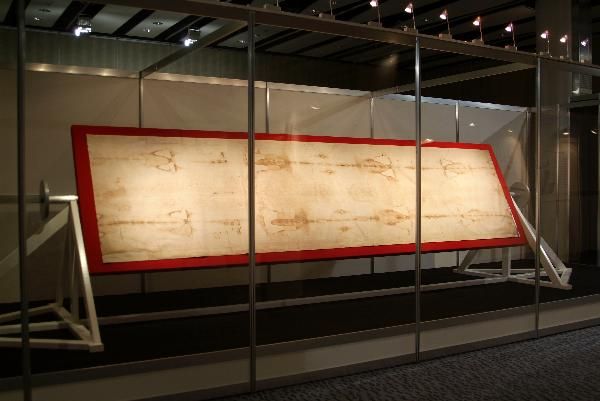
I’m studying the historical evidence around the resurrection, and I was looking at the Shroud of Turin.
The labs dated the fabric to around the late 1200s if I’m remembering right but it’s been patched right?
Is the Shroud of Turin real?
I’m studying the historical evidence around the resurrection, and I was looking at the Shroud of Turin.
The labs dated the fabric to around the late 1200s if I’m remembering right but it’s been patched right?
Is the Shroud of Turin real?
The shroud itself is real but we’ll never really know the true history of it… It doesn’t really matter, though. The resurrection doesn’t hang on it either way.
I believe it is real but… nobody (sensible) can tell you for sure.
In the 1980s, carbon dating came back around 1260 to 1390 but who knows what the patch was and they didn’t test the full thing. The blood chemistry does line up with the crucifixion details, which says enough to me that it’s real even if we don’t know the full story.
That’s where I land too, and the people claiming total certainty either way (skeptics included) make me trust them less.
Same here. Faith was never meant to rest on linen and lab results anyway.
Every time I’ve gone down the shroud rabbit hole, the loudest voices on both sides are the ones most sure of themselves. The people who know the fibers and the chemistry are the ones saying ‘well, maybe’ and ‘we can’t say.’
I used to want someone to tell me for sure. At some point I noticed I was expecting a lab result to do what faith is supposed to do, which it can’t. I believe it’s real and I hold it loosely.
People were calling it a fake almost as soon as it surfaced… the lab dating came later.
It’s a great piece of art, but I think it’s a fraud through and through.
A few years back there was a study that used X-ray analysis on the linen fibers and dated the cloth a lot closer to the time of Jesus. Plenty of people dispute the method though, so read it next to the 1988 carbon dating instead of picking one and ignoring the other.
Even if the linen dates to the first century, that still wouldn’t tell you whose face is on it. Josephus says the Romans under Varus crucified around 2,000 people after Herod died, so a crucified man’s burial cloth from that region and time could have belonged to any of thousands of people.
I think the odds are slim, though not zero.
I was researching the wrong question, and it took me an embarrassingly long time to figure that out.
Something like 99% of scholars, nonbelievers included, agree Jesus of Nazareth was crucified… if the shroud were proven authentic tomorrow, it would mostly confirm something almost nobody disputes.
The debate people have is over whether he walked out of the tomb, and a burial cloth can’t tell you anything about that.
Say a new test did push the date back to the first century. That would only show it’s an old burial cloth. You’d still have no way of knowing who was buried in it or what happened to him after.
The patches come from a fire in Chambéry in 1532 and the 1988 sample was cut from a corner well away from them. The bigger debate is whether that corner was an invisible medieval reweave.
Raymond Rogers, a chemist who had worked on the 1978 research team, published a paper in 2005 arguing the sample area had cotton and dye mixed in.
The sample came from one corner, and later work on the threads found cotton fibers and a different dye that don’t match the main linen. Treat the shroud as a side detail and lean on the early letters.
The X-ray method measures how much the linen’s structure has aged and that depends on the temperatures and humidity the cloth went through, which we don’t know. I wouldn’t treat it as a replacement for radiocarbon dating.
If an artistic method can’t reproduce the image, that only shows the method probably wasn’t used.
When someone says it took resurrection energy I’d want to see evidence for that claim, apart from the other explanations failing.
The ‘impressive fake’ option is what keeps me on the fence. If it’s a forgery, then some medieval artist made something that people with modern equipment still can’t agree on how to reproduce.
So it’s either a miracle or the work of one of the best hoaxers in history.
Nobody knows what a resurrection would do to cloth, so the argument mostly comes down to ‘we can’t think of another explanation.’ I’d be careful about leaning on the shroud for resurrection evidence.