No weapon formed against you shall prosper. Okay, but what does that actually mean, because I’m trying to understand the real meaning of Isaiah 54:17.
Like, who was this promise even for? Not every person on earth, clearly. I turn on the news each morning and it’s just people losing their lives to guns, car attacks, all of it. Those weapons absolutely did their damage. So how do I square that with what the verse says? I keep trying to and it just… doesn’t hold together when you look at what’s actually happening around us.
Maybe there’s something deeper I’m not seeing. How do you read it?
23 Likes
In the original Hebrew, “weapon” (keli) means any tool made for harm. The second half of the verse names the main one: every tongue that rises against you in judgment you shall condemn. So physical arms are covered, but the emphasis is on accusation and slander. Words.
The promise was spoken to Israel coming out of Babylonian exile, and the verse ends by calling it the heritage of the servants of the Lord.
“Shall not prosper” doesn’t mean it shall never wound. Scripture is full of God’s servants who suffered terribly. Stephen was stoned to death. The weapon did its damage, but it didn’t end God’s purposes in him or silence the church. That’s the scale the promise works on.
Some years my congregation reads Isaiah 54 during Eastertide, and I think that placement is the best commentary on it. The cross was the most successful weapon ever formed against God’s purposes, right up until Sunday morning. Now I hear it as nothing that happens to you gets the last word. The invincibility version falls apart by breakfast, like you said.
4 Likes
‘Weapon’ here covers anything used to attack or silence God’s people, not just literal guns and blades. ‘Shall not prosper’ means it won’t accomplish its final purpose or overturn what God has promised.
The clearest example is Jesus. The cross killed him, and it still couldn’t stop God’s saving work. Isaiah 54 points past immediate safety toward restoration and lasting vindication. So the verse isn’t promising believers will escape violence, it says evil and death don’t get the last word.
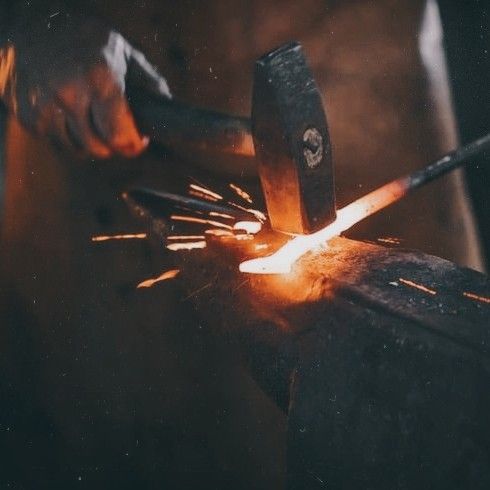
The verse right before this one already says what counts as a weapon. God says he made the blacksmith who turns out a weapon for the job it was built for, and he made the destroyer too.
When I saw guns and car attacks on the news I took that as proof the promise fell apart. But I was reading “formed against you” as a claim that nothing harmful would ever get made. The weapon here is that forged instrument aimed at the person being spoken to, and the God speaking is the same one who says the forging hands are his.
1 Like
The “you” in this chapter is Zion personified, and the ending broadens the heritage to the Lord’s servants.
In that corporate frame, one servant can be killed while the people God is restoring still stand, and their vindication still comes from him. My inner refrigerator-magnet theologian would prefer personal invincibility, but the movement from cross to resurrection gives “prosper” a bigger horizon than immediate survival.
For years I skipped past the blacksmith to get to verse 17. Once you see God claiming the forging hands as his own, the promise reads more like ‘I know what’s coming off that anvil, and I’ve already set its limits.’
If you put the weight on ‘formed’ the verse falls apart. Put the weight on ‘prosper’ and there’s room for real suffering and a promise that still holds.
I did the same thing with ‘formed against you,’ treating it like a force field. Arrows can still fly; they don’t get the final say.
1 Like
Heart language (spiritual), same idea as putting on the full armor of God. The purifying is the point.
The protection’s internal.
Scripture never said we’d skip the trials, only that the weapon won’t get the final word.
Obedience means walking with God through the fire while trusting his purposes outlast whatever’s aimed at you.
Isaiah 54 was a promise of deliverance and hope to Israel right at the end of the Babylonian Exile. Cyrus conquered Babylon, freed them, and that points forward to Christ’s return bringing all believers home.
The verse isn’t a blanket promise that believers won’t face physical harm, it’s about God’s ultimate vindication of His people and the failure of any scheme to permanently destroy what He’s building.
1 Like
What shifted things for me was realizing this was addressed to Israel as a nation, not to individual people. Even an Israelite standing there listening to Isaiah would have known it didn’t mean they personally couldn’t die in battle, or that their enemies wouldn’t eventually wipe out the nation.
I can’t slap this verse on my own life like a bumper sticker. But it still tells me who God is, his character and the way he sticks with his people over the long haul.
‘The smith may heat the iron, but God decides what it bends into.’ Bows broken, spears cut in two, chariots burned.
Spurgeon pointed out that God has done this over and over through history, sometimes by keeping the weapon from touching his people at all, other times by letting it strike and then pulling good out of the wreckage.
The church has been attacked from every angle but is still standing. You personally could still suffer, though.
It holds. That promise is the heritage of the Lord’s servants (2 Corinthians 1:20 reminds us that all God’s promises find their ‘Yes’ in Christ). Suffering still touches us sometimes, but what He accomplished on the cross swallows it up and keeps the promise secure.
The Septuagint renders it ‘no device formed against you will reach its destination.’ Kli in Hebrew means any tool or instrument. Every scheme and every accusation hurled at Christ looked like it prospered, until the resurrection proved the sharpest weapon had already been conquered.
Jerome’s Latin has vas (vessel).
It frustrates me when people treat individual verses like fortune cookies, as if they were written specifically for them. We yank Isaiah 54:17 out of context and slap it on a coffee mug.
Look at how the chapter opens. A barren woman, and the future of Israel. It’s communal and covenantal, pointing to something bigger than whether I personally avoid getting hurt today.
We can still draw hope from it, but we have to read it through the whole story, including the New Testament fulfillment.
Picture a guy who tapes Isaiah 54:17 to his shirt and jumps off his garage roof expecting to float. That’s the move Satan pitched to Jesus in the wilderness with Psalm 91 (“he will command his angels, lest you strike your foot against a stone”). Jesus wouldn’t touch it. He trusted the promise but wouldn’t turn it into a stunt to test God.
That’s what happened when I watched the news and decided the verse had failed. I was asking it to work like a bulletproof vest. It’s a word from someone who has already decided how the story ends.
1 Like
The verse ends by calling it the heritage of the Lord’s servants. The promise seems meant for folks who are already trying to follow Him, not just anyone.
In my own life it showed up when some family stuff tried to pull me away from what I felt called to do, mostly words and pressure, nothing physical. None of it stuck in the end, though the hurt was real. But God seemed to step in and sort the outcome anyway.
The real fight is over whether those words get the final verdict.
Verse 17 gives the most airtime to the tongue that rises in judgment, the accusation meant to condemn. Slander and lies from voices trying to define who God’s people are and silence what they’re called to say.
The physical stuff wounds, sure, but that’s not where it gets decided.