I’ve been thinking about this a lot lately, and it feels like the right place to say it. I believe in the gift of tongues. Scripture backs it up, and I think every believer can have it.
But I don’t know how to do it yet.
I’ve been to countless altar calls. People have laid hands on me more times than I can count. Nothing ever comes out. So I stopped trying after a while, because I started wondering if something was wrong with me. That keeps bothering me though.
You ask the Holy Spirit to fill you, then you open your mouth and start speaking out loud whatever sounds come, and trust Him to shape them.
I don’t think there’s really a trick to it, it’s something God decides for you.
I got stuck for years waiting for something to happen to me. Every altar call trained me to stand there hoping some force would move my jaw, and when nothing did, I walked away feeling defective, same as you describe. A friend eventually pointed out a line in Acts. The disciples ‘began to speak.’ They did the speaking, and the Spirit gave the words. I’d been treating my own voice as off limits.
Maybe just skip the crowded altar for a while. Pray alone in your car or your kitchen where nobody is watching, and let yourself speak even if it sounds like nonsense at first.
The Holy Spirit doesn’t show up on demand, and one experience isn’t the test of whether He’s in you.
There’s no technique in the Bible that gets you tongues. There’s no YouTube guide on it. Just pray and stay open to it. Don’t try to force it or copy sounds you’ve heard other people make. 1 Corinthians 12 says the Spirit hands out gifts as He decides. Paul even asks whether everyone speaks in tongues, and the answer is no. Plenty of faithful Christians never get this gift and that’s okay.
If words you don’t understand start coming out when you pray, go ahead and speak them to God. Just stay in control of yourself. In a church service, Scripture says there should be interpretation. Paul spends the whole next chapter talking about love, not tongues.
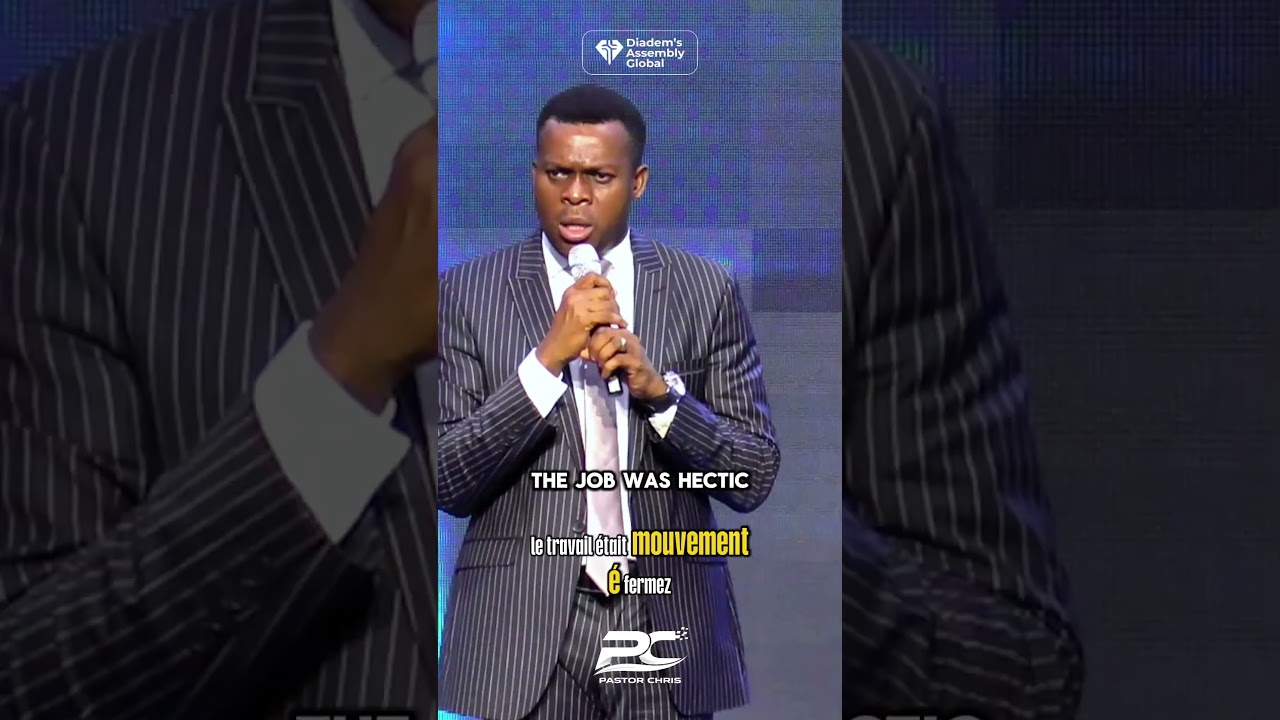
I saw a short message from Pastor Chris Onyema that takes a different approach.
He encourages praying in tongues in regular places too, like at work or by yourself in a room. It won’t directly answer how to receive the gift. What stood out to me was his advice to close the door and spend time alone with the Holy Spirit, away from distractions. He says you come out refreshed and thinking more clearly. Since you’ve mostly tried in crowded, high-pressure places, a private room with no one around could make it easier to open up to it.
I agree with the others here, you’re fine, and the Spirit gives as he chooses. If you want to keep seeking, his emphasis on everyday private prayer could be helpful to check out.
Scripture shows a few different moments. At Pentecost, the crowd heard known languages. Paul also describes prayer to God in words the speaker doesn’t understand, and he says if those words are spoken in church, someone has to interpret or the speaker should keep quiet.
I get the distinction between speaking willingly and waiting for some force to move your jaw. I’d be careful with ‘whatever sounds come’ as a method, though. Acts says the Spirit gave them utterance. The speech itself came from Him, which is different from starting with improvised sounds and trusting Him to turn those into tongues.
Stepping away from the pressure of the altar makes sense. Praying privately leaves room to respond freely without assuming every unfamiliar syllable is from the Spirit.
Yep, Acts 2:8 has them asking, ‘How is it that each of us hears them in our own native language?’ And the part that floored them comes right before, in verse 7: ‘Are not all these who are speaking Galileans?’ Galileans had such a recognizable accent that a servant girl caught Peter by it (Matthew 26:73, ‘your accent gives you away’). Picture the guy who got outed by his accent over a campfire now speaking flawless Elamite.
My favorite detail is that a few in the crowd decided the disciples were drunk (v. 13).
At Pentecost, outsiders understood real languages and it pointed them to Christ. In 1 Corinthians 14:2, Paul describes someone speaking to God where ‘no one understands him.’
And for our original poster, verse 13 offers comfort. Even at the first Pentecost, some people heard it and thought it sounded like nonsense. So if your private prayer ever feels awkward or strange at first, you’re in historic company.
Maybe you’re overthinking it. Glossolalia isn’t only a Christian thing, it shows up all over.
Some researchers think people who are naturally drawn to mystical or trance-like experiences pick it up more easily, especially if they don’t fight it. So maybe you’re not letting yourself go there.
What if tongues is like perfect pitch? Some have it, some don’t, and it doesn’t make you a lesser musician.
I don’t have tongues. God gave me dreams and their interpretations, discernment that’s helped me out of sketchy spots, plus a street ministry that fills me up.
One believer speaks in tongues every day but doesn’t pray otherwise, while another never gets tongues but prays so much the carpet’s worn thin.
So ask Him for it. And be ready if the answer’s no.
God cares about your heart, not your performance. If your church is making you feel that pressure, maybe step back for a while and talk to Him on your own.
1 Corinthians 13:8 says these gifts would cease or vanish away.
In Acts 2, those were actual earthly languages the speakers didn’t know, and the listeners from different regions recognized their own tongues being spoken.
Paul ranks tongues as an inferior gift across chapters 12 through 14. It’s one continuous discussion, and he emphasizes they served a specific purpose as a sign to unbelievers, not an ongoing practice for personal edification.
Not everyone speaks in tongues, and Paul asks that exact question in 1 Corinthians 12 (the implied answer is no) while talking about the Spirit giving different gifts to different people.
Nothing’s wrong with you. Tongues might not be your gift.
Nothing happening at an altar call doesn’t mean something’s wrong with you. The experience feels real to the person having it, but real doesn’t automatically mean supernatural in origin. I’m not saying God can’t work through tongues, but sometimes the pressure and group dynamics play a bigger role than we want to admit.
The whole spectacle-driven approach to tongues misses what Scripture describes. Look at Acts. People spoke real languages, ones the listeners recognized as their own.
And if nothing’s happening at altar calls, maybe that’s not a problem with you at all.
My mentor used to say fear of faking it keeps more people quiet than lack of faith does. She’d point to Luke 11:11-13. No father hands his kid a snake when they ask for a fish.
The Father gives the Holy Spirit to those who ask, so if you’re praying sincerely, you don’t have to worry about getting something counterfeit.
What finally changed things for me wasn’t a service. My dad was in surgery and I was sitting in the hospital chapel with nothing left to say, sighing and half-groaning at God over and over.
Later I came across Romans 8:26, the Spirit interceding with groanings too deep for words. Prayer beyond my own vocabulary had already been happening, not in the dramatic form I expected.
So keep asking, but maybe stop measuring your prayer life by one outcome.