Brothers and sisters in Christ, I’ve been thinking a lot about marriage counseling lately and how it seems to be the go-to advice in our community. While I’m grateful that God has provided us with these resources for healing and growth, I’ve noticed some couples struggling to actually access or benefit from counseling services.
My wife and I were blessed to find an amazing Christian counselor who helped us through some communication issues last year, but I know many of our friends haven’t been as fortunate in finding the right fit. Sometimes one spouse is reluctant to go, and other times the cost or scheduling becomes a real barrier to getting help. I’d really love to hear how others in our community have navigated these challenges, especially in finding counselors who align with our Christian values while still being professionally qualified. Has anyone found creative solutions, like online counseling or church-based programs that have worked well?
For those who’ve had success with counseling, what advice would you give to couples who are hesitant to take that first step? Thank you for sharing your experiences, and may God continue to guide us all in strengthening our marriages.
Your prayer matters. Have thousands of Christians around the world offer a prayer on your behalf. Our unique prayer submission will spread your prayer to Churches, Shrines, prayer groups and holy sites around the world.
My spouse almost didn’t go because of me. I figured counseling was for marriages that were in trouble, and ours was just… tired. We had two kids under four and had started talking to each other like coworkers. A woman from our small group said: “You don’t wait until your car breaks down to change the oil”. You might have heard this before but for good reason.
What got me in the door was my wife suggesting three sessions. Just three, then we’d decide together whether to keep going. I could say yes to that without admitting anything.
You can find someone qualified who also shares your faith. Our counselor was a licensed marriage and family therapist and an actual believer. Her clinical training mattered more day-to-day than her theology did. She prayed with us when we asked, but mostly she taught us practical stuff, like how we kept interrupting each other and reading intent into tone.
The American Association of Christian Counselors has a search directory, and a lot of Christian counselors do telehealth now.
Church and professional counseling can work together fine. In a healthy setup, they cover different ground.
Getting there took some legwork for us, though. “Christian counselor” can mean almost anything which we didn’t know going in (but you sure learn fast). We started treating the first phone call like an interview. Are they licensed? Have they worked with couples before? How does faith actually come into sessions? Do they use evidence-based approaches?
Just having a Bible on the bookshelf tells you nothing about their training.
Some friends found sliding-scale sessions through a Christian counseling grad program. Another couple had their church cover part of the fee, and I don’t think they had to ask twice. Online counseling gave us way more options than what was within driving distance. Just confirm the counselor is licensed in your state before you get attached to someone.
Pastors and older couples in your church can help a lot on the spiritual side, but they don’t have the same training or expertise for clinical stuff.
Finding the right counselor matters, but so does how you walk into the room. I secretly wanted the counselor to look at the evidence and confirm my spouse was the problem in the beginning. I can admit that now, but I couldn’t at the time. Counseling got useful once I started asking what I could own and change.
Most of the progress happened at home anyway, like practicing the communication stuff and actually following through on the small commitments we made between appointments. A counselor can guide it, but they can’t do the work for you.
The biggest barrier I see with people considering counseling is that they worry about who is going to find out the details of their life. Even when your Church has free services available… people don’t want to use it.
In a smaller church, going to counseling can feel like announcing that something is wrong. I’ve watched couples put it off for years because of how it might look to the people they sit next to every Sunday. Even when that same church family would almost certainly rally around them if they knew.
If you’re in that spot, you don’t owe anyone an explanation. Driving one town over for a counselor is also a reasonable choice.
We saw someone early on who spent most of the session quoting headship passages at my spouse while I sat there feeling invisible. Sometimes the first session just isn’t the one and I walked out convinced counseling wasn’t for us, and it took a long time to try again. The second counselor was a completely different experience. A bad fit just means that person wasn’t the right one.
Sometimes it takes a little bit of time to find the right person and that’s perfectly okay (and pretty normal).
An older couple from church, married forty-some years, helped us in between by having dinner with us once a month. They had been through hard seasons and were open about it. Those dinners made it feel less strange to my husband to ask for help, who was the hesitant one. For anything deeper, you still want a licensed counselor. Really can’t stress that part enough.
I assumed the Lord would just drop the right counselor in our laps because our hearts were in the right place. What actually happened looked a lot more like what you describe.
A few awkward phone calls, including one man who got defensive when I asked if he was licensed. Then a woman who answered your exact question about how faith comes into the sessions so plainly that my husband went silent on the other line. The searching forced us to agree on what we were even looking for, and I don’t think we would have recognized her otherwise.
Being embarrassed about cost keeps a lot of people from doing the legwork at all. Did your church offer to help with the fee on their own, or did someone have to work up the courage to ask?
Most guys I know will cop to tired in a heartbeat. That’s a much easier door to walk through. Which is basically what happened at our kitchen table last week. My brother-in-law and his wife were over, and he said almost exactly what you said, that they were just running on fumes after their second kid. Then my wife pointed out he’d spent a whole Saturday getting the truck serviced for a squeak nobody else could even hear.
He didn’t have a comeback for that one.
Nobody has to admit the engine is shot to agree to an oil change.
A lot of people skip booking an appointment because they can’t name what’s actually wrong but I think this might help.
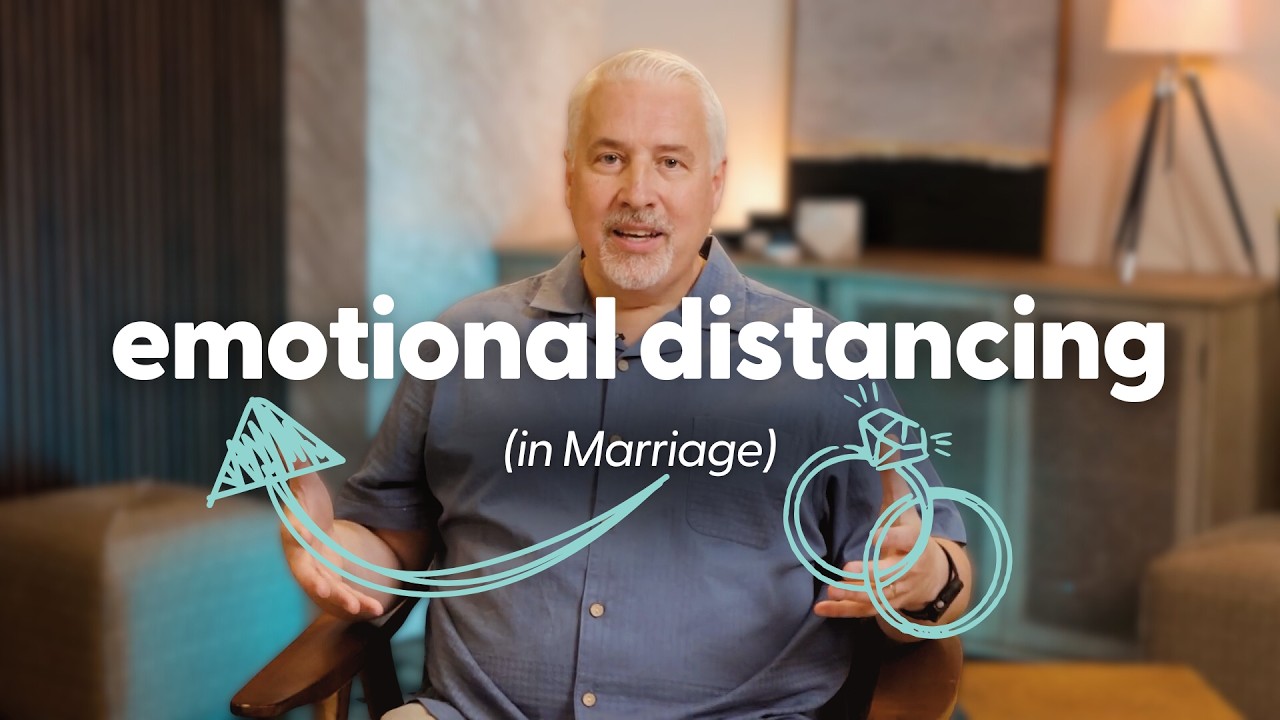
He does short weekly ones on marriage with his wife, Aaron. It asks what you do when you feel a wall between you and your spouse, like they don’t want to connect. He starts with his own story which helped me because it felt like he actually understood.
Early in their marriage, he felt controlled by talks about money, so instead of saying anything, he hid extra cash in a tennis ball can in the basement. It came out when a neighbor came by to borrow some. He admits the problem was his own, and that God has a way of not letting those secrets stay buried. For someone who thinks counseling is only for marriages in crisis, that might work better than pushing therapy directly, because it shows how small avoidances create distance.
It’s worth a few minutes to watch, it could really help.
‘Running on fumes’ is a soft way to put it. It gives the other person room to talk without cornering them. Did your brother-in-law seem any more open to counseling after that?
We had to ask, and it took me about four months to work up to it. Our church had a benevolence fund that technically covered counseling… but it was never mentioned from the front, so I half assumed I’d be taking money from someone with a real emergency. The deacon I finally emailed wrote back the same afternoon and seemed surprised more people didn’t use it.
My father-in-law used to say there’s an old proverb: “The door that is pushed swings back; the door that is asked opens” I’ve never been able to source it and I suspect he made it up on the spot, but he was right either way. When we were at that point, what worked for us was not asking my husband to agree to counseling at all, I asked him to help me pick someone. Suddenly he was the one reading bios and asking whether the guy was actually licensed. Giving him a job instead of a diagnosis really helped a lot.
Shepherding the flock means knowing the flock well enough to notice when a marriage is struggling and step in. No copay or insurance hoops, and no six-week waitlist while things get worse at home. Pastoral care.
Churches did this before we outsourced it all to professionals with sliding scale fees.
When we first started looking for help, our pastor suggested we skip my wife’s individual counselor, even though she already trusted him. Someone who’s only heard one side of the story for months isn’t exactly neutral.
So we found someone neither of us had met. That fresh start felt like a small mercy from God.
Both of you deserve a counselor who’s meeting your marriage for the first time, not just one spouse’s version of it.
I’ve noticed the “follow your heart” advice clashes with Jeremiah 17:9.
I’d like to hear from couples who did prep work first, like studying marriages in Scripture and asking hard questions while dating so they knew each other. Did that reduce the need for counseling later, or does everyone end up needing outside help eventually?
Needing help and failing aren’t the same thing, though.
Glad you two found someone good. Most people don’t realize how tricky it’s until they’re the ones making the calls.
When you call your insurance, don’t ask whether they cover marriage counseling. Ask whether they cover CPT code 90847 for a client with a diagnosis. Ask the first way and you usually get a flat no. Most plans won’t pay when the focus is relationship dynamics or communication, because they only cover what counts as medically necessary. The workaround, when it fits, is billing under one spouse’s existing diagnosis.
If one of you is already being treated for depression or anxiety, ask the counselor whether joint sessions can fold into that treatment plan. A good one won’t stick a diagnosis on somebody to get paid.
A few other things that helped cut our costs: A lot of employers have an EAP that covers free short-term counseling, usually 3 to 8 sessions. HSA and FSA money can go toward it too. Ballpark on the faith-based side is $90 to $220 a session. Ask straight out about income-based fees because plenty of therapists hold back slots for reduced rates and never mention it publicly.
The waiting is usually what does the damage. Most couples wait years after a problem shows up before they finally go.
Dragging someone in against their will usually backfires.
There’s something called discernment counseling that’s built for exactly this standoff. It’s short-term, usually one to five sessions, for couples where one person is thinking about divorce and the other wants to save the marriage. The first session is two hours, and after that each person decides separately if they want to continue, up to five sessions total. You usually end up keeping things as they are, moving toward divorce, or doing six months of real couples therapy with divorce off the table during that time. About half the couples choose the six-month option.
My cousin and his wife tried it after she had refused counseling for two years. She didn’t push back on this one because nobody was asking her to repair the marriage yet.
If there’s violence or coercive control, or untreated severe substance issues, joint sessions aren’t the right starting point.
If someone needs a low-pressure first step, Focus on the Family offers a free one-time consultation with a licensed or pastoral counselor and can refer you to Christian counselors in your area. The number is 1-855-771-HELP. My wife called it before I had agreed to anything, and she still mentions it.
 which we didn’t know going in (but you sure learn fast). We started treating the first phone call like an interview. Are they licensed? Have they worked with couples before? How does faith actually come into sessions? Do they use evidence-based approaches?